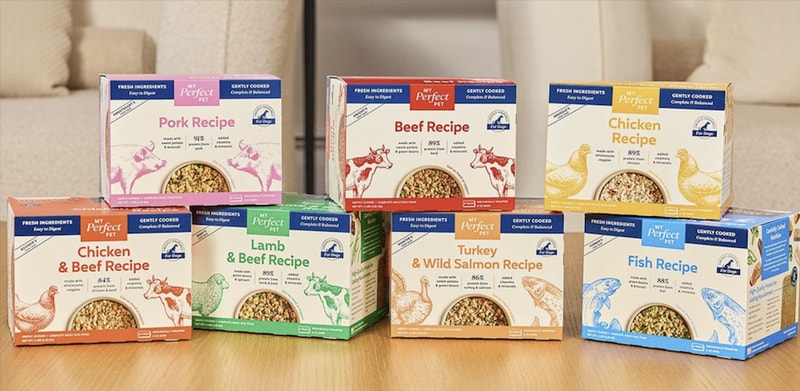
My Perfect Pet — a brand that has produced gently cooked dog and cat food since 2007 — has introduced a comprehensive rebrand featuring new packaging. The look highlights main proteins and vegetables on the front, an updated visual design, and an eight-ounce bar format that is intended to simplify thawing and portion control for pet owners.
As part of this rebranding initiative, My Perfect Pet has shifted away from a character-based naming system toward an ingredient-forward approach. The company embraces the "fresh is flexible" positioning with the hope of "supporting both a full daily meal or as a nutrient-dense topper."
Pet owners who have been curious about fresh or whole-food diets for their animals but felt intimidated by complicated storage or serving instructions may find the eight-ounce bar format significantly less daunting, as it reduces the need to chip away at larger frozen blocks or measure out servings by guesswork.
Image Credit: My Perfect Pet
Why This Trend Is Growing
- Ingredient-forward Branding
- A shift from character-led names to ingredient-focused labels creates clearer transparency around protein and vegetable sourcing that could redefine premium positioning in pet nutrition.
- Portion-controlled Formats
- Eight-Ounce Bar Packaging simplifies thawing and portioning, reducing waste and changing consumer expectations for convenience in fresh pet food.
- Fresh-is-flexible Positioning
- Emphasizing meals that serve as full feeds or nutrient-dense toppers signals a move toward multi-use product strategies that blur lines between treats, toppers, and core diets.
Industries Being Reshaped
- Pet Food Manufacturing
- Producers are presented with opportunities to redesign production lines and supply chains for smaller, frozen-format SKUs that prioritize freshness and precise portioning.
- Packaging Design and Materials
- Demand for thaw-friendly, portioned packaging creates room for novel materials and hermetic solutions that balance shelf-life with consumer convenience.
- Retail Pet Supply
- Shelf assortment and merchandising practices may shift as retailers accommodate compact frozen SKUs and educate shoppers about fresh-diet options.