
From Gen Z Storytelling Campaigns to Easter Lock Boxes
Debra John — April 27, 2026 — Marketing
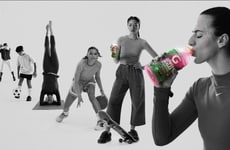
April 2026 marketing trends suggest a refined evolution toward participatory storytelling, immersive environments, and culturally attuned brand strategies that extend well beyond conventional promotion. At the forefront, initiatives such as Coach’s ‘Explore Your Story’ illustrate how brands are embedding narrative directly into product design, enabling consumers to engage with identity and self-expression in a tangible way. In a similar context, Vans’ Spring 2026 campaign revisits its origins to foreground authenticity, positioning heritage not as nostalgia, but as living dialogue with contemporary creative communities.
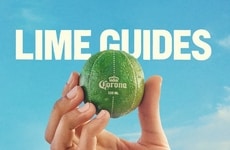
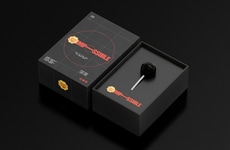
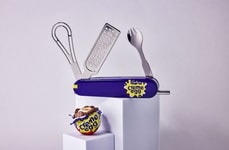
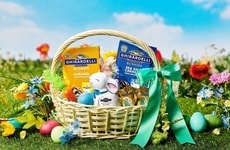
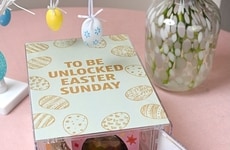
Simultaneously, brands are translating behavioral insights into inventive, often playful interventions. Aldi’s 'Easter Lock Box' transforms a common consumer habit into a shareable solution, while Cadbury’s 'GooTool' reframes product interaction as customizable and exploratory. Alongside this, Corona’s precision-cut 'Lime Guides' demonstrate how even the smallest ritual can be reengineered to reinforce brand consistency and sensory experience.
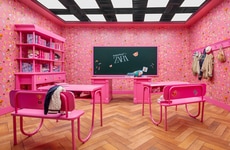
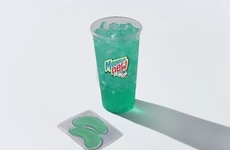
Experiential marketing continues to expand in scale and ambition. ZARA’s 'Butterbear Academy' pop-up constructs a fully immersive retail narrative, while Don Julio’s World Cup-inspired bottle merges collectible design with global cultural moments. Meanwhile, unexpected extensions—such as Taco Bell’s Baja Blast under-eye patches—highlight a willingness to blur category boundaries in pursuit of cultural relevance. At the same time, purpose-driven messaging is becoming more structurally integrated, as seen in Peanut and Tommee Tippee’s campaign around “matrescence.”
Together, these shifts suggest a marketing landscape that operates less as broadcast and more as choreography—where brands orchestrate moments of interaction, meaning, and cultural alignment to remain distinctly resonant.
Simultaneously, brands are translating behavioral insights into inventive, often playful interventions. Aldi’s 'Easter Lock Box' transforms a common consumer habit into a shareable solution, while Cadbury’s 'GooTool' reframes product interaction as customizable and exploratory. Alongside this, Corona’s precision-cut 'Lime Guides' demonstrate how even the smallest ritual can be reengineered to reinforce brand consistency and sensory experience.
Experiential marketing continues to expand in scale and ambition. ZARA’s 'Butterbear Academy' pop-up constructs a fully immersive retail narrative, while Don Julio’s World Cup-inspired bottle merges collectible design with global cultural moments. Meanwhile, unexpected extensions—such as Taco Bell’s Baja Blast under-eye patches—highlight a willingness to blur category boundaries in pursuit of cultural relevance. At the same time, purpose-driven messaging is becoming more structurally integrated, as seen in Peanut and Tommee Tippee’s campaign around “matrescence.”
Together, these shifts suggest a marketing landscape that operates less as broadcast and more as choreography—where brands orchestrate moments of interaction, meaning, and cultural alignment to remain distinctly resonant.
9.6
Score
Popularity
Activity
Freshness