From Affordable AIO Coolers to On-Device AI Chipsets
Colin Smith — February 8, 2026 — Tech
January’s computer trends made one thing clear: the industry is leaning hard into portability, modularity, and silent efficiency. CES 2026 set the tone with devices that rethink what a “PC” looks like and how heat is managed inside increasingly compact hardware.
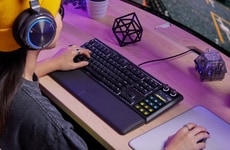
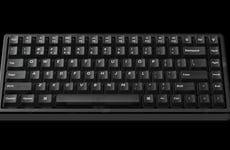
HP’s EliteBoard G1a stood out by turning a full Windows machine into a desktop keyboard. Powered by AMD’s Ryzen AI 300 Series processor and secured with HP Wolf Security, it plugs into any display to become a complete workstation—ideal for hybrid workers who move between home, office, and shared spaces. By consolidating compute power into a familiar peripheral, it reduces clutter, simplifies IT deployment, and still supports on‑device AI tasks. It reflects a broader shift toward portable hubs rather than traditional laptops or towers.
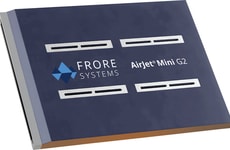
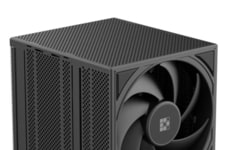
Thermal design also took a leap forward with YPlasma’s introduction of DBD plasma actuators for cooling. Instead of fans, the system uses an ultra‑thin film that generates ionic wind to move heat silently and without mechanical parts. At just 200 microns thick, it can be integrated directly into chassis walls or heat sinks, enabling slimmer devices and quieter operation while managing both heat removal and heat application.
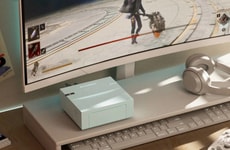
Taken together, January’s trends point toward a future where computers are lighter, quieter, and more adaptable. The PC is becoming a flexible object you can carry in one hand, while cooling systems are becoming nearly invisible. As AI workloads grow and hybrid work becomes the norm, expect more experimentation with compact designs, silent thermals, and modular setups that let people build the workspace they need wherever they are.
HP’s EliteBoard G1a stood out by turning a full Windows machine into a desktop keyboard. Powered by AMD’s Ryzen AI 300 Series processor and secured with HP Wolf Security, it plugs into any display to become a complete workstation—ideal for hybrid workers who move between home, office, and shared spaces. By consolidating compute power into a familiar peripheral, it reduces clutter, simplifies IT deployment, and still supports on‑device AI tasks. It reflects a broader shift toward portable hubs rather than traditional laptops or towers.
Thermal design also took a leap forward with YPlasma’s introduction of DBD plasma actuators for cooling. Instead of fans, the system uses an ultra‑thin film that generates ionic wind to move heat silently and without mechanical parts. At just 200 microns thick, it can be integrated directly into chassis walls or heat sinks, enabling slimmer devices and quieter operation while managing both heat removal and heat application.
Taken together, January’s trends point toward a future where computers are lighter, quieter, and more adaptable. The PC is becoming a flexible object you can carry in one hand, while cooling systems are becoming nearly invisible. As AI workloads grow and hybrid work becomes the norm, expect more experimentation with compact designs, silent thermals, and modular setups that let people build the workspace they need wherever they are.
9.2
Score
Popularity
Activity
Freshness